
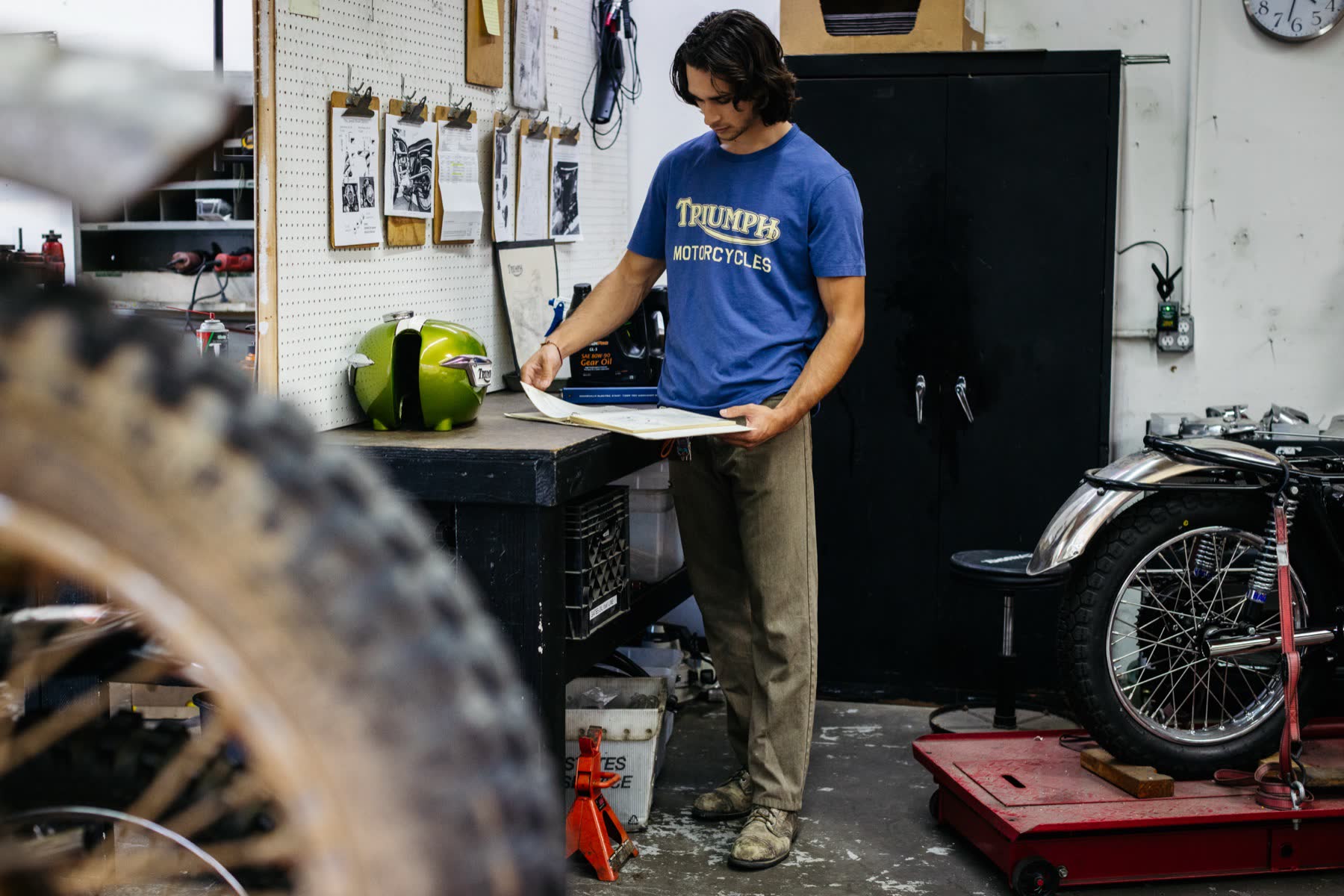
The 1968 Triumph manual says service every 1,000 miles. The 1968 Triumph manual was written for an owner who rode their bike to work and put 8,000 miles on it a year. Most of our customers ride 1,200 miles a year, which means the calendar matters more than the odometer, and the published service intervals are mostly irrelevant.
A real maintenance rhythm scales to how the bike gets used. Three usage patterns cover almost everyone:
- Weekend rider: 1,000 to 3,000 miles a year. Most weekends, plus a longer trip in the spring or fall.
- Frequent rider: 3,000 to 6,000 miles a year. Most weeks the bike comes out, plus events and rallies.
- Daily or event runner: 6,000+ miles a year. The bike is a primary transportation choice or shows up at every vintage event in the region.
The schedule below assumes the middle bucket. Scale up for daily runners, scale down for occasional riders. Skip nothing, change nothing.
Every month, or every ride if you ride monthly
Five minutes. Eyeball the bike. Tire pressure (you will not check this often enough and it matters). Chain tension. Oil level on the dipstick (in the oil tank, not the engine — Triumphs are dry-sump). Anything obviously leaking that was not leaking last month. Look at the wiring under the seat for chafe.
Catch problems before they escalate. A loose chain that you noticed at five minutes is a free fix. A loose chain that ate the swingarm bushings is a half-day repair.
Every quarter, or every 1,000 miles
About an hour. Primary chain adjustment, more often on a pre-unit. Rear chain lube and tension. Plug check, gap if needed. Look at the carb slides through the air filter intake — sticky throttle is something you do not want to find at 75 mph. Brake feel: shoes or pads, fluid level on disc-brake bikes.
Every year, or every 2,000 to 3,000 miles
A half-day in the garage with a manual on the bench.
- Engine oil and filter. Change in the fall before storage, not in the spring after.
- Gearbox oil.
- Primary chaincase oil.
- Tappets check and adjust.
- Points gap and timing, on bikes still running points.
- Carb sync if it has been a year.
- Wheel bearings: lift each wheel, spin, listen and feel for grit.
- Fork oil if you ride it hard. Otherwise every two years is fine.
Things people skip that they should not
The primary chain on a pre-unit. It stretches faster than you think. Once it is loose, it eats sprocket teeth and primary chaincase rubber, and you are doing a much bigger job to fix it.
Cleaning and re-greasing the wheel bearings every two years. Triumph wheel bearings are loose-ball on most bikes, and they fail silently when the grease dries out. A wobble at 60 mph is rarely the first sign — sometimes the first sign is the bearing seizing.
Cable lube. Cables die slow and then suddenly. A clutch cable that snapped at a stop sign is a Saturday afternoon you did not plan for. A drop of cable lube once a year prevents most of it.
Things that are overkill
Pulling the head every winter to "check." Leave it alone unless the bike is telling you something is wrong (low compression, oil consumption, blowby).
Repacking every greasable joint every six months. The swingarm bushings, the steering head, the wheel bearings — these are annual or two-year items.
Changing fork oil annually on a bike that gets ridden 800 miles a year. The oil is fine for two seasons. Three if you ride gently.
Replacing things that are not broken in the name of "preventive." A working condenser does not need to be replaced. A clean carb does not need to be torn down. Fix what is wrong, then ride.
The rhythm you keep is better than the rhythm that is perfect.
A note on the manuals
The factory workshop manual for your bike is worth owning. The 1968 Triumph manual is reprinted regularly and runs about thirty dollars. The information in it is correct, the procedures still work, and the torque specs are right. Trust the manual on the bike, trust your shop on the rhythm.