
Yes, the Prince of Darkness jokes are funny. Yes, they are mostly deserved. Also: a vintage Triumph with sorted electrics is a reliable bike, and most "the electrics are bad" diagnoses are wrong. Three specific problems account for the majority of what gets called "electrical trouble" on a 1960s Triumph, and none of them are the wiring loom.
The three usual problems
First: bad grounds. Triumph frames ground through every junction. Paint at the steering head, corrosion at the engine mount, a loose battery negative terminal — any one of these can break a circuit that the rest of the bike depends on. Most starting problems and intermittent electrical issues are ground problems pretending to be wiring problems.
Second: worn ignition switches. The Lucas barrel switch wears at the internal contacts. The fix is replacement of the internal mechanism, available from British Wiring or Wassell, about thirty dollars in parts. Symptoms: the bike loses power intermittently when you turn the bars, or kills the lights when you start it.
Third: charging system failure on pre-1971 bikes. The dynamo brushes wear out and stop charging the battery. The bike will still run on the battery for a few hours, then die. Owners assume the battery is the problem and buy a new battery, which lasts a few hours longer.
Lucas, defended
The Lucas equipment on these bikes was not bad. It was designed in 1958, manufactured to a price, and held to a standard that was reasonable for the era. The original wiring loom in good condition is fine for decades. Lucas points are reliable when set up correctly and fail predictably (which means you can carry a spare set and never get stuck). Lucas dynamos are weak by modern standards — 60 watts of charging on a pre-1968 bike — but they work when serviced.
The reputation for unreliability comes from sixty years of marginal repairs by people who were trying to keep an old bike running on a budget. Splices made with electrical tape. Aftermarket bulbs that drew more current than the alternator could supply. Twelve-volt conversions done halfway. None of that is Lucas’s fault.
Boyer Brandsen and Pazon electronic ignition
The most common upgrade. Boyer Brandsen (and Pazon, which is similar) replaces the mechanical points and condenser with an electronic ignition module mounted in the points cavity. It earns its keep for two reasons.
You stop having to set points every 2,000 miles. The timing stays where you set it. And the bike kicks easier from cold because the spark is consistent across kick speeds, where mechanical points only fire well above a certain kicker velocity.
Why we do not always install Boyer: a points bike that is set up right starts fine. The Boyer modules can fail — uncommon but possible — and when they do, you are towing. A period-correct bike (a real desert sled build) should keep its points. The right answer depends on the bike and the rider.
The 12-volt conversion
Pre-1968 Triumphs are 6 volt. 1968 forward are 12 volt. Converting a 6V bike to 12V is a common upgrade. Right when: you ride at night and need better headlight output, you plan to add an electronic ignition (most need 12V), or the original 6V system is in poor condition anyway. Wrong when: it is a show bike, or the 6V system is well-preserved and works.
A 12V conversion done well — new alternator, new rectifier, new coils, new bulbs throughout — is a $400 to $600 job in parts and pays for itself in lighting alone if you ride after dark.
When to replace the wiring loom
If your current loom has a spider’s nest of automotive splices and electrical-tape repairs under the seat, replacing the loom is faster than diagnosing it. British Wiring and Wassell both make Lucas-style replacement looms that are correctly color-coded and well-built. About $150 for a complete loom. A full afternoon to install if you are methodical.
If your loom is original Lucas cloth-jacket wiring in good condition, leave it. Replace individual sections only where the insulation has cracked.
The diagnostic order
Before you replace anything, work this list.
- Battery voltage cold. 12.6V or better on a 12V bike. Anything less is a starting point that needs explanation.
- Every ground point: tighten, clean to bare metal where you can.
- Run a dedicated frame-to-engine ground strap. Cheap and eliminates most intermittents.
- Headlight earth: notorious on some bikes. Some loom designs ground the headlight through the bucket only — a separate ground wire fixes flickering lights.
- Both ignition coil mounts. The coils often ground through their mounting brackets, and a loose mount is a flaky coil.
Most Triumph electrical problems are mechanical. Cleaning a ground beats throwing a Boyer at it.
The shop bike
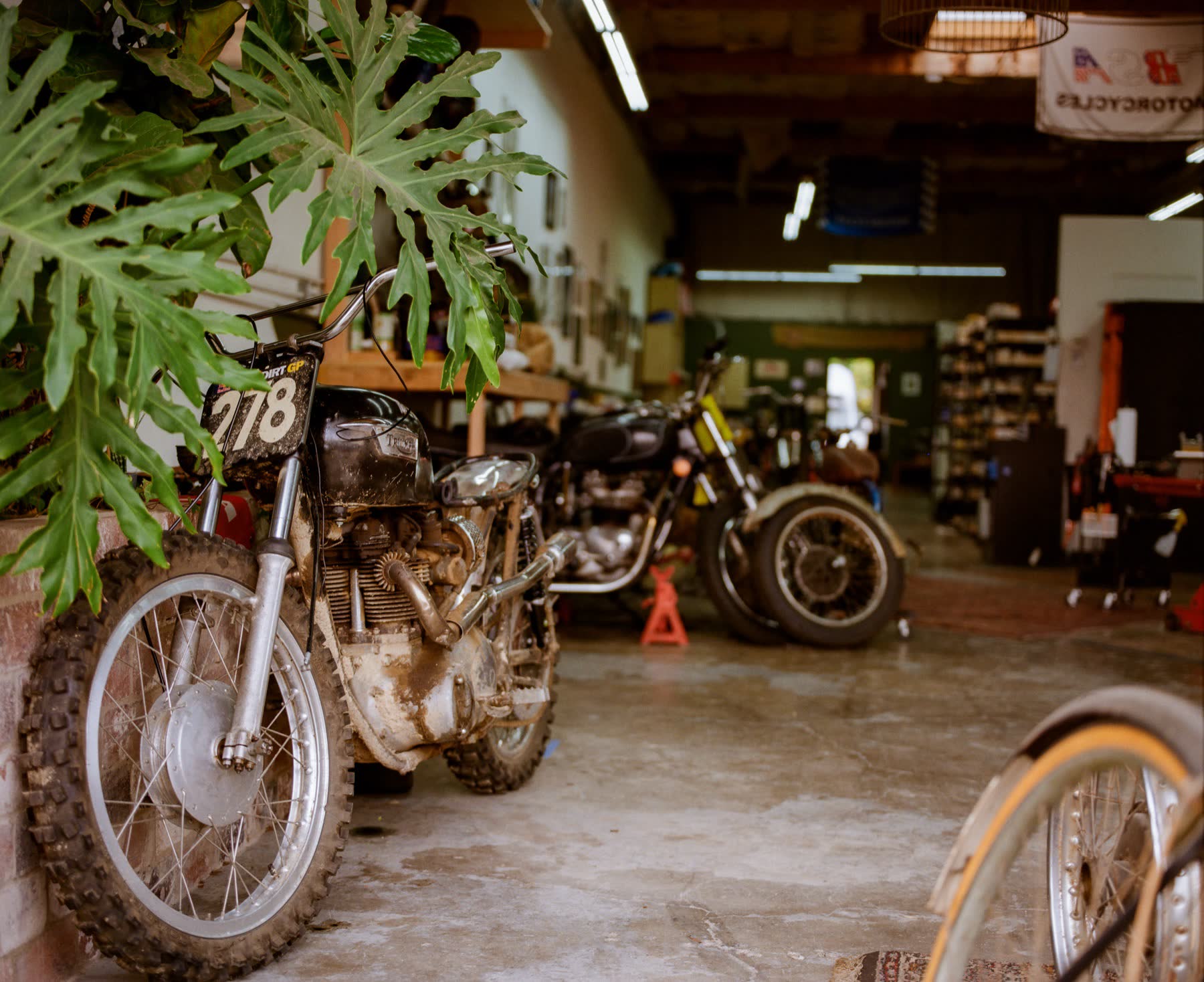
Our shop TR6C is 12V converted, Boyer ignition, original loom with the brittle sections replaced, new coils, LED tail and brake. It starts on the first kick most days. It runs at night without making the headlight flicker. The electrics are not glamorous and they are not original. They are the right configuration for the way the bike actually gets used.