
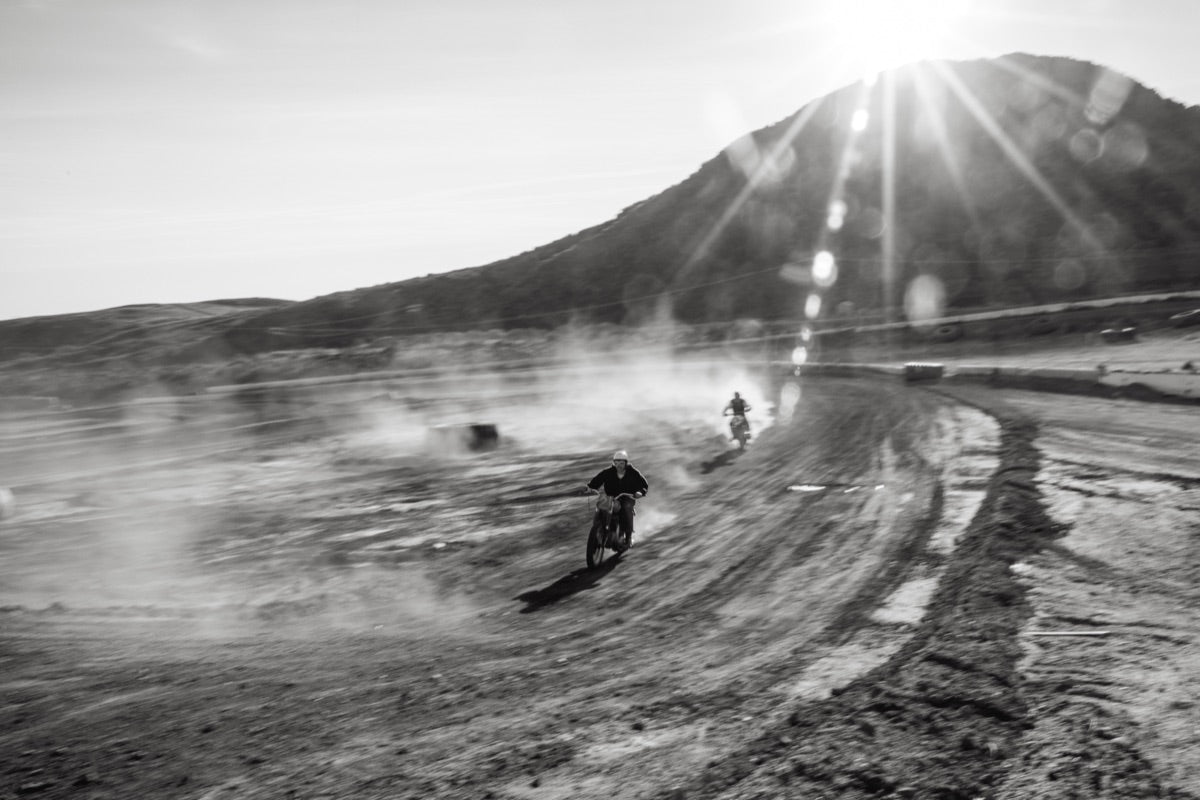
A vintage TR6 in the Mojave is the original "this is the right tool" feeling. The bike, the place, the air, the dust — all of it is what the bike was built for. But not every part of the Mojave loves an old Triumph. Some of it is rocky and unforgiving and the bike will not enjoy it.
Here are the routes that work for a vintage bike, the ones we would avoid, and what to bring with you when you go.
Routes that suit an old bike
The Mojave Road, east of Afton Canyon. 138 miles end-to-end through smooth, sandy, two-track terrain from Needles to Barstow. The eastern section between Afton Canyon and Marl Springs is the friendliest stretch for vintage suspension. Plan two days if you are doing the full route. Bring water and a Garmin inReach.
Stoddard Wells, north of Apple Valley. Wide fire roads, smooth surfaces, easy navigation, OHV-legal year-round. The right place to learn how a vintage bike feels in the dirt without committing to a long route. You can ride for an hour or for four hours.
Johnson Valley, northwest corner of San Bernardino County. The dry lakebed days are perfect — flat, fast, visible, easy to bail out. Stay away from the Hammers (the rock-crawling section); a vintage Triumph in there is a recovery operation. The perimeter trails are friendly.
El Mirage Dry Lake. The traditional venue for SCTA land-speed events. Smooth, fast, vintage-friendly. Open to general use most of the year. Watch for SCTA event days — those are closed to non-participants.
Lucerne Valley fire roads. Small loops, plenty of variety, easy to bail out if the bike starts making a noise you do not like. The District 37 Hare and Hound usually runs through here in the fall, which is also a good time to spectate.
Routes to avoid on a vintage bike
Anza-Borrego south of S-2. Too rocky, too remote, no shade for a bike that runs hot. Beautiful country, wrong bike for it.
Rasor Road during a hare-and-hound. Spectate, do not ride. Active race traffic has chopped the surface up into bottomless whoops that no vintage suspension wants to negotiate.
The Mojave Road between miles 60 and 100 in summer. Heat, sandy washes, no water for long stretches. Spring and fall only on this section. The eastern third is more forgiving year-round.
Anywhere you cannot ride out of. Vintage bikes break. A trail that requires a four-wheel-drive vehicle to recover you is the wrong trail for a vintage Triumph.
Seasons
October through November is the best riding window. February through April is also very good, especially after a wet winter when the surfaces are firm. June through September is too hot — the bike runs hot, the air filter eats dust faster, and the heat is genuinely dangerous on a 100-mile day in the desert.
What to carry
- Water. A gallon per person, minimum. More for longer routes.
- Spare spark plug, plug gasket, and a plug wrench.
- Spare clutch cable. Cables die when you need them most.
- A real spare tube (not a glue patch kit) plus tire irons and a pump or CO2.
- A small tool roll: 10/12/14mm wrenches, screwdrivers, allen keys, vice grips.
- Tools to remove the rear wheel, in case you need to fix a flat.
- Phone with offline maps loaded. Gaia GPS or onX Offroad both work.
- A Garmin inReach for any route over 20 miles from pavement.
Tires
Dunlop K70 in 4.00 x 18 rear, 3.50 x 19 front, will get you through most of the Mojave at a conservative pace. The tread pattern is street-biased but capable. Real knobs — Maxxis IT or Pirelli MT43 — if you are doing more than 50 miles of dirt or actually riding sand washes. Do not take ribbed road tires into deep sand. They do not work and the bike will fight you.
The point of a desert sled is not to find out where it cannot go. It is to ride where it shines.
Come by
If you are planning a desert ride, drop by the shop on a Friday. Coffee, paper maps, a few of us have ridden whichever route you are considering. We will tell you where the line is between "great Saturday ride" and "how we ended up walking out."