
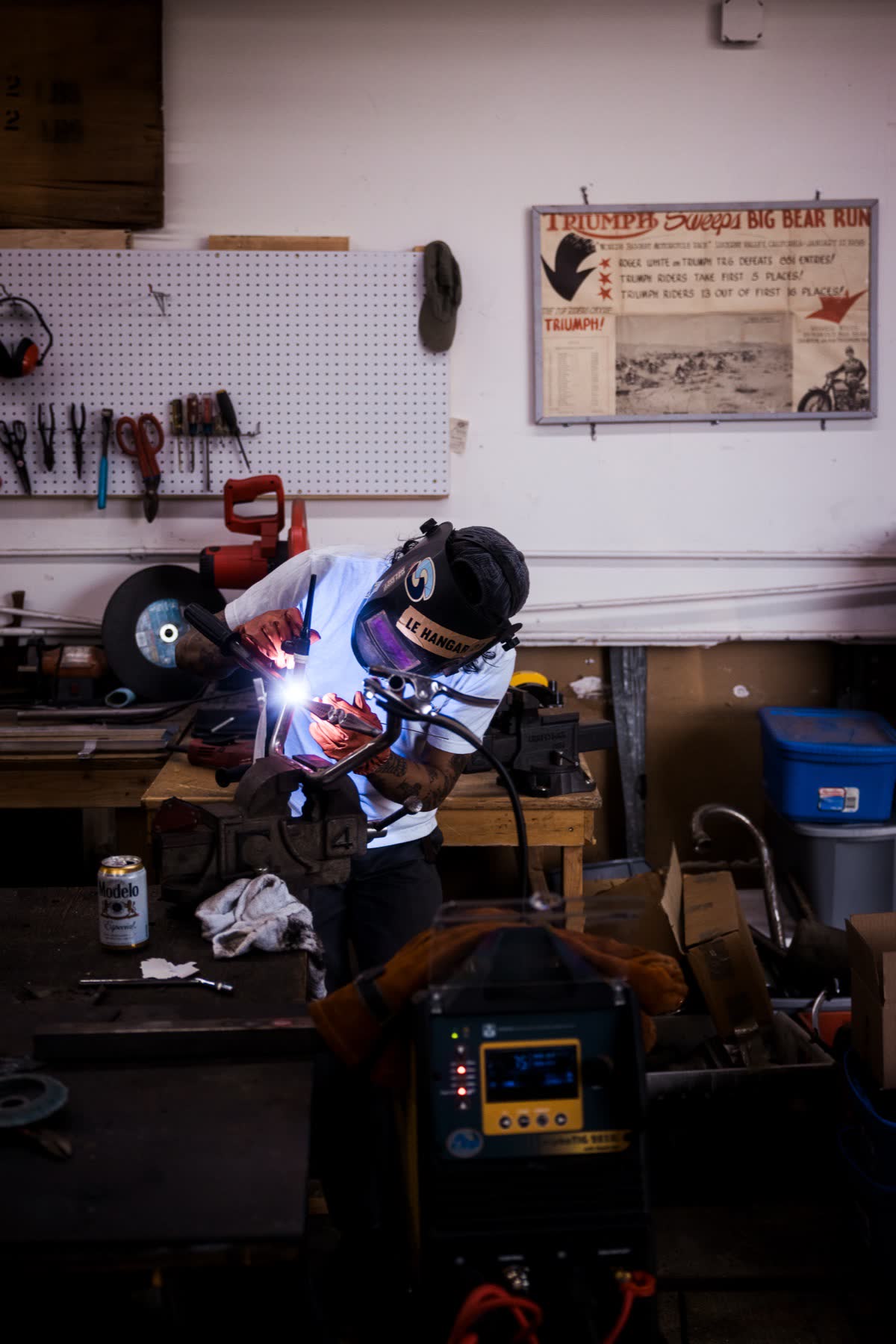
There is a Triumph problem and then there is a Triumph problem. The bike was built for sixty years, in two countries, by three different sets of owners. Where it fails is consistent. After enough of them through the shop, you stop being surprised.
This is grouped by where the problem lives on the bike rather than ranked as a list, because that is how you actually diagnose. You hear a noise, you trace it to a system, you work the system until you find it. Skip to whichever section matches what your bike is doing.
Oil system
Weeps from the rocker boxes after the engine warms up: the cover gaskets are tired or the bolts have been over-torqued. Copper-faced gaskets, 15 lb-ft of torque, even pattern. Twenty minutes.
Leak from the primary chaincase bottom: the bottom seam gasket or the engine sprocket seal. While you have the cover off for one, replace both.
Oil tank weeps at the filler cap: cap gasket worn, or the crankcase breather is plugged and pressure is forcing oil out the top. Check the breather pipe first.
Wet sump: bike sits, oil drains from the tank into the crankcase, you fire it up and oil blows out every gasket. The anti-drain ball valve at the bottom of the tank is stuck or weak. Replace the valve assembly.
Carbs and fuel
Poor idle, hunting, will not run smoothly under 1500 rpm: pilot circuit blockage. Pull the pilot jet, verify daylight through it, clean the carb body in an ultrasonic.
Throttle hangs at part-load: a worn slide or a worn carb bore. You cannot tune around it. Rebuild or replace.
Leaks fuel from the float bowl after sitting: the needle valve is worn or stuck open. Replace the needle, check the float height.
Hesitation off idle even with a clean pilot: the pilot air screw is too far out (lean), or the float bowl is being starved. Set the air screw to 1.5 turns and iterate.
Ignition
Poor starting, kicks back: timing off, or points gap drifted. Check timing first, points second. The Triumph timing spec is in the manual. Get it right and most starting problems go away.
Misfire above 4,000 rpm: failing condenser or weak coils. Replace both together.
Bike runs fine cold, dies when warm: the coils are heat-soaking. Replace with modern epoxy-filled coils. The original Lucas 17M12 coils are a known weak point at 50,000 miles.
Electrics
Dead battery after a ride: the charging system is not charging. Dynamo brushes worn on pre-1971 bikes, or the rectifier failed on alternator-equipped bikes. Brushes first because they are easier to access. Rectifier if brushes do not solve it.
Intermittent everything (lights, horn, signals): a bad ground. Triumph frames ground through every junction and a paint flake at the steering head can break the whole circuit. Clean every ground point, run a dedicated frame-to-engine ground strap, retest.
Headlight dim at idle, bright at speed: charging is marginal. On pre-1971 bikes this is normal at idle on a 60-watt dynamo. On alternator bikes it is a worn stator or rectifier.
Gearbox
Jumps out of second under load: worn shift fork or selector camplate. The bike is still ridable in third and up, but the failure is progressive. Plan the rebuild before you lose another gear.
Hard to find neutral at a stop: usually clutch drag, not a gearbox problem. Adjust the clutch cable for proper free play first. If that does not solve it, the clutch plates are warped or oil-soaked.
False neutrals between gears: the shift drum detent spring is weak or the pawl is worn. Internal to the gearbox.
Primary and clutch
Chain rattle in the primary: pre-unit chain is over-stretched and the gearbox needs to walk back; unit chain tensioner is shimmed wrong. Both are simple fixes once you know which.
Clutch slip under load: plates oil-soaked or springs tired. Pull the cover, swap plates and springs, ride.
Clutch drags, will not release fully: cable adjustment first (there should be a quarter inch of free play at the lever). Warped plates second.
Frame, suspension, brakes
Bike wallows in slow turns: steering head bearings are notched. Replace with tapered rollers. The original loose-ball setup wears predictably.
Wobble at speed: loose swingarm pivot first, worn rear shocks second. Both are quick to check on the stand before you go chasing anything bigger.
Front brake fades after a hard stop on a drum-brake bike: glazed shoes. Scuff them with sandpaper or replace if the linings are below 2mm.
Spongy front on a disc-brake bike (1973+): aerated fluid first, worn master cylinder second. Bleed, then rebuild if bleeding does not solve it.
Almost nothing about these bikes is mysterious. Most problems are mechanical, predictable, and traceable to the part that wears.
Keep a notebook
The thing customers underestimate is that Triumph problems repeat. The same bike will give you the same symptom twice if you do not fix the root cause, and the same model will give two owners the same problem in the same year of ownership. A notebook with the symptom, the fix, and the mileage saves you the same diagnosis twice. It also helps the next owner of the bike, which is a kindness you will appreciate when you buy your next one.